
Nominal width of condoms—what exactly is that?
Condoms come in a wide variety of sizes, which can vary significantly depending on the product and manufacturer. To ensure that the condom fits you properly—meaning it’s neither too big nor too small for the best feel and optimal protection—all condoms in the European Union must list the nominal width of the condom on the packaging.
However, there are often many questions surrounding nominal width, as it’s not always entirely clear how nominal width relates to your penis size or how to calculate the right condom size.
In the following, we’ll try to answer all your questions about nominal width—which is also listed on many packages as “nominal width” or “standard width.”
What is nominal width?
The nominal width of condoms—or standard width—is a specification in accordance with the international condom standard DIN EN ISO 4074 and is therefore clearly defined. On condom packaging, you’ll find this specification listed in millimeters—for example, for Mister Size, it ranges from 47 mm to 69 mm.
But what exactly does that mean, and how is it measured? Is it the diameter, the circumference, or the radius of the condom? Unfortunately, it’s none of those—it’s half the circumference of the condom at its narrowest point.
If you want to measure it yourself, you can lay a condom completely flat and then determine the width at its narrowest point—for example, with a ruler—and you’ll have the nominal width, because when laid flat, the condom measures exactly half its circumference.
Of course, the “narrowest point” is only relevant for condoms that aren’t cylindrical—and therefore aren’t the same width throughout. In addition to the majority of condoms, which are cylindrical, there are also some contoured condoms that are slightly narrower below the glans, for example.
How do you measure the nominal width?
As mentioned above, the nominal width is half the circumference at the narrowest point. The easiest way to measure this is to lay a condom completely flat and loosely and then measure the width with a ruler.
Here’s a photo to illustrate how you can measure the nominal width of a condom. Lay the condom as flat as possible across a ruler and then read the width:

By the way, if you notice a slight deviation when remeasuring the width, that’s still within the standard. According to ISO 4074, the width may vary by +/- 2 mm.
Why measure half the circumference?
Even though it may sound confusing at first to measure exactly half the circumference, this is actually the simplest and most unambiguous method for comparing the width of condoms. We’re usually accustomed to specifying either the diameter or the full circumference for round objects, but due to the flexible material of condoms, this is often a difficult and imprecise approach. For example, if you were to measure the diameter, you’d likely get a different result with every measurement. See our images for more details:
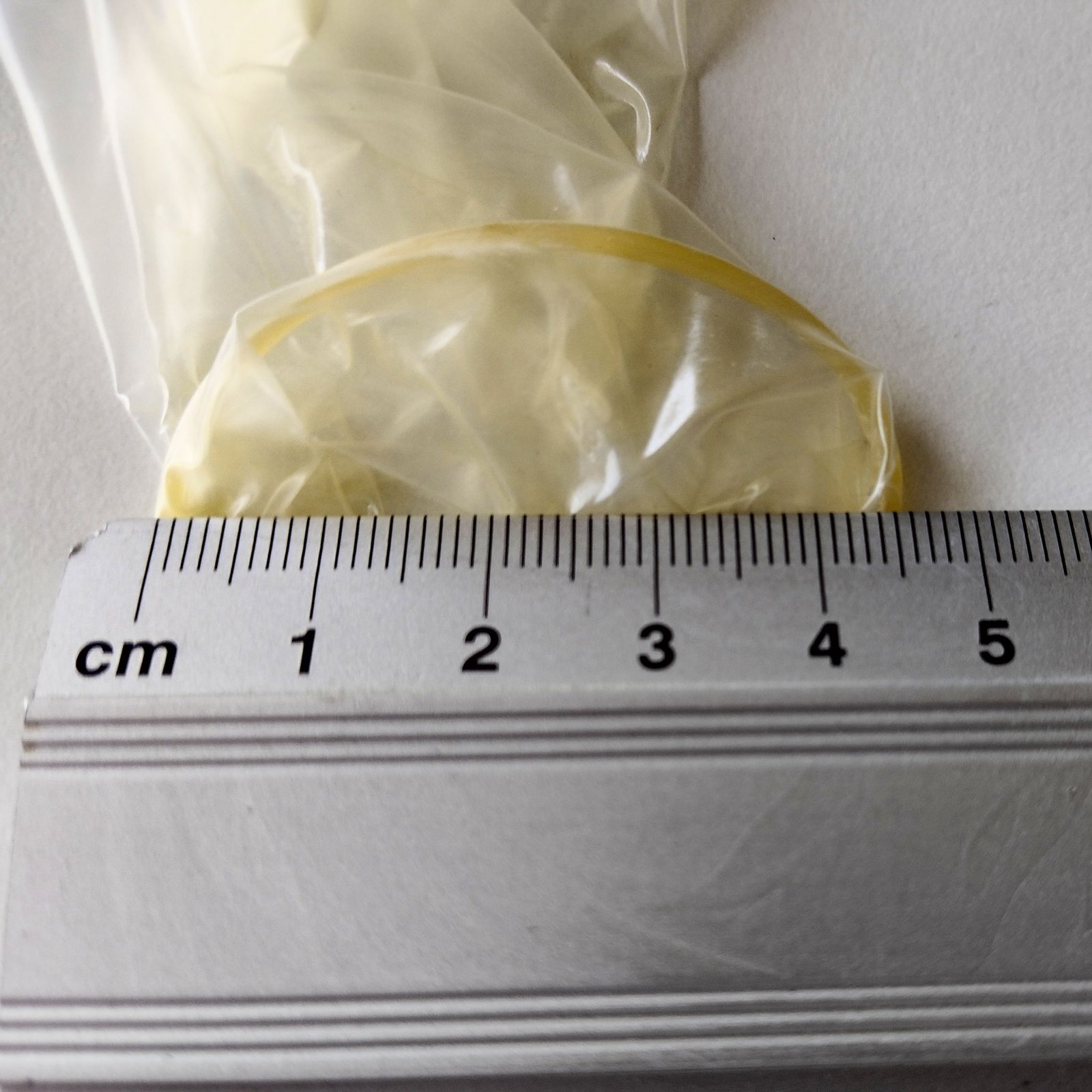
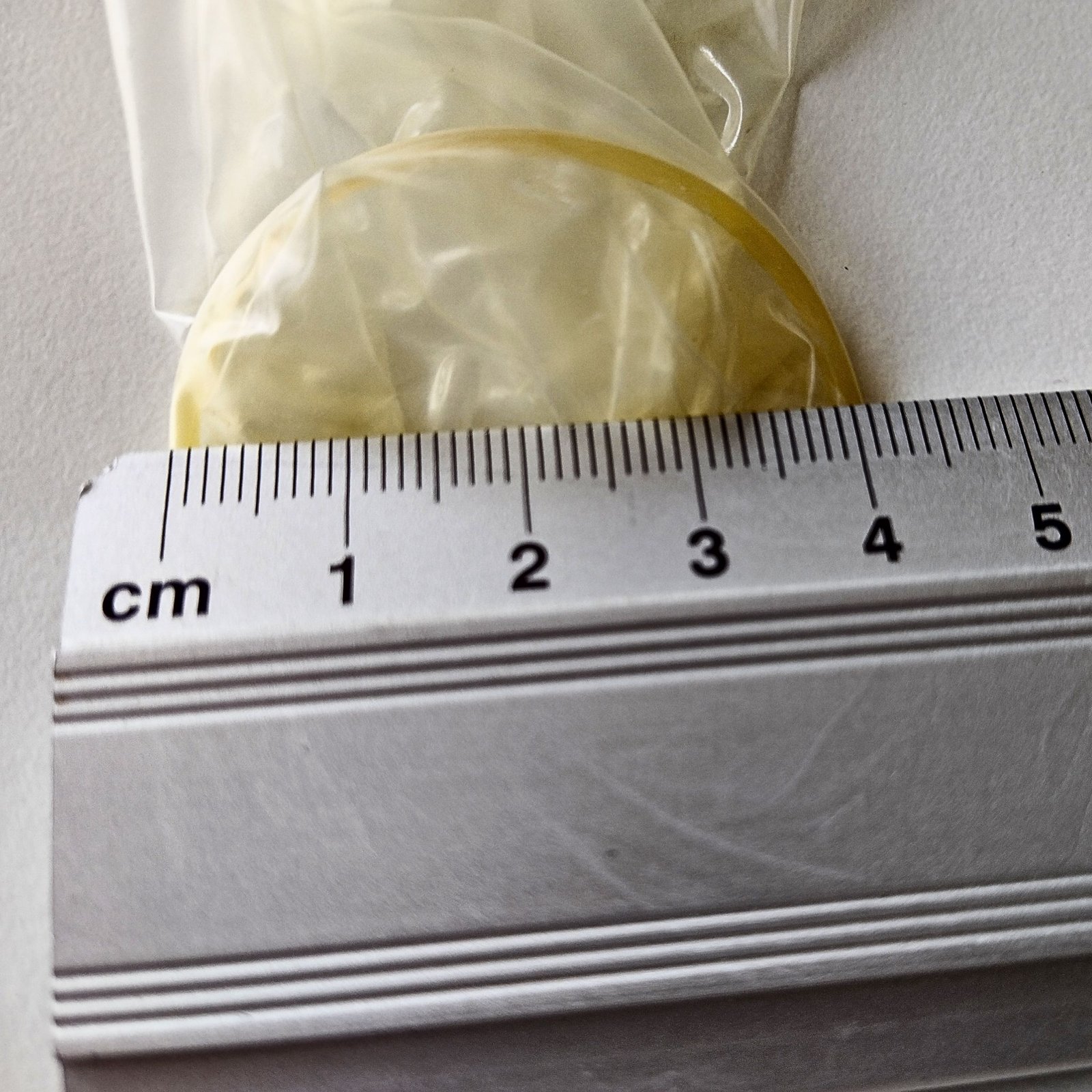
How wide are standard condoms?
Most standard condoms have a standard width of 52 to 54 mm, although 54 mm is often considered rather large. Condoms sold as XL or XXL usually start at a nominal width of 56 mm. Extra-small condoms are, of course, smaller than 52 mm. With many condom brands, you’ll often find a standard condom and an XL condom that’s only slightly larger. However, since both safety and your comfort during sex suffer if you use the wrong condom size, at Mister Size you’ll find condoms ranging in width from 47 mm to 69 mm.
Where is the nominal width listed on the packaging?
On a condom package, you’ll usually find the nominal width or standard width listed in the text on the back of the package. In some cases, there’s also a symbol indicating the width on the package.

So how do I find the right condom size?
Of course, just like with condom width, it’s difficult to measure half the circumference of your penis, and the condom shouldn’t be too loose either. To help you find the perfect condom size, we at Mister Size have developed several simple methods for you. For example, you can use our app to determine your condom size (no download required), or check out our article on how to find the right condom size in 4 easy steps.
Conclusion
At first glance, the nominal width specification for condoms might be a bit confusing because, at first, it has nothing directly to do with the width of your penis. However, with our simple measurement methods, you can still easily find your perfect condom size anytime. The condom size is equivalent to the nominal width, so a size 53 condom has a nominal width of 53 mm. If, for example, only “XL” is listed on the front of the packaging, just take a closer look at the packaging and you’ll find the width specified somewhere.